How do you know if your lecture notes are actually good enough to study from?
Published 18 September 2026
Check your notes against what you're expected to learn, then try using them to answer a few questions. You're looking for two different gaps: material your notes don't explain, and material they explain but you haven't learned yet. Each needs a different next step.
Check what your notes contain
Start with one lecture. Find its learning objectives, assigned questions, or the topics covered in the slides. Use those as a checklist beside your notes.
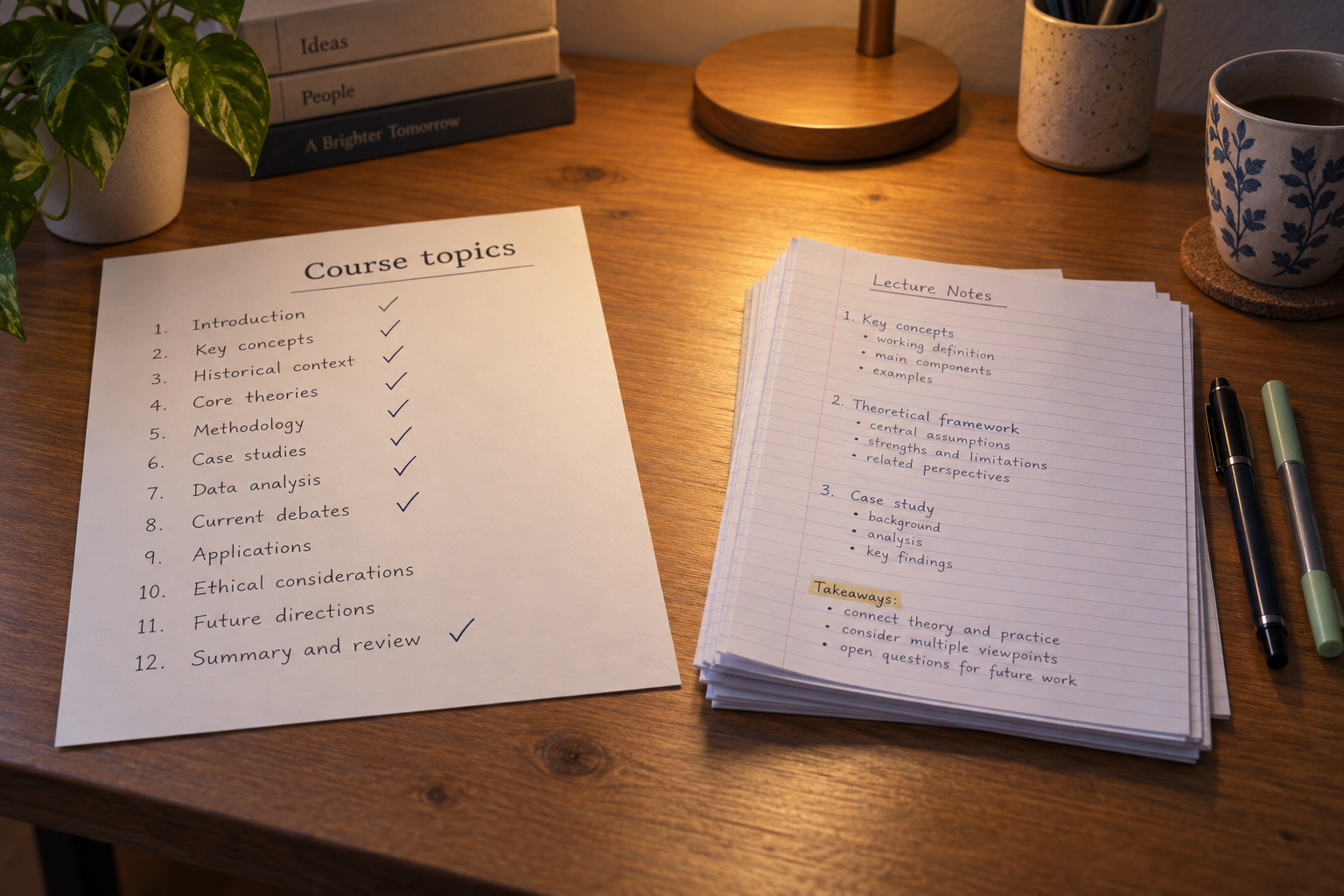
For each topic, look for enough detail to follow the explanation: what the idea means, how it works, and an example, diagram, or worked problem where relevant.
Suppose your notes say:
Correlation does not imply causation.
That records an important statement. But if the lecture covered why, and your notes contain neither an explanation nor an example, you have something to fill in before those notes can help you study it.
Write down the specific gap: "Find the lecture's example showing why two things happening together doesn't establish that one caused the other." That gives you a task you can finish.
Your notes don't need to reproduce the textbook. A clear reference to the relevant explanation or worked example can be enough.
Check what you can do with the material
Choose a few questions from the assigned practice, or turn the learning objectives into questions. Include something that asks you to explain or apply an idea, rather than just name it.
For the example above, try:
Two things tend to happen together. Why isn't that enough to establish that one causes the other? Give an example.
Close your notes and answer. Then compare your response with the course material.
If the explanation is in your notes but missing from your answer, you've found something to practise. If your notes can't resolve the question either, return to the slides, reading, or instructor to fill that gap.
Correct what you missed, then try answering again with the explanation hidden. Come back to the question in a later study session, too.
Being able to summarize a topic is a start. Check that you can also handle the kinds of questions your course asks about it.
How Bento helps you make that check
Bento builds study guides from your own notes. It pulls concepts from your notes and can suggest additional topics that a class at that level typically covers. It asks whether you want notes on those topics and can add a short explanation. Compare those suggestions with your course material; they aren't confirmation of what your instructor will assess.
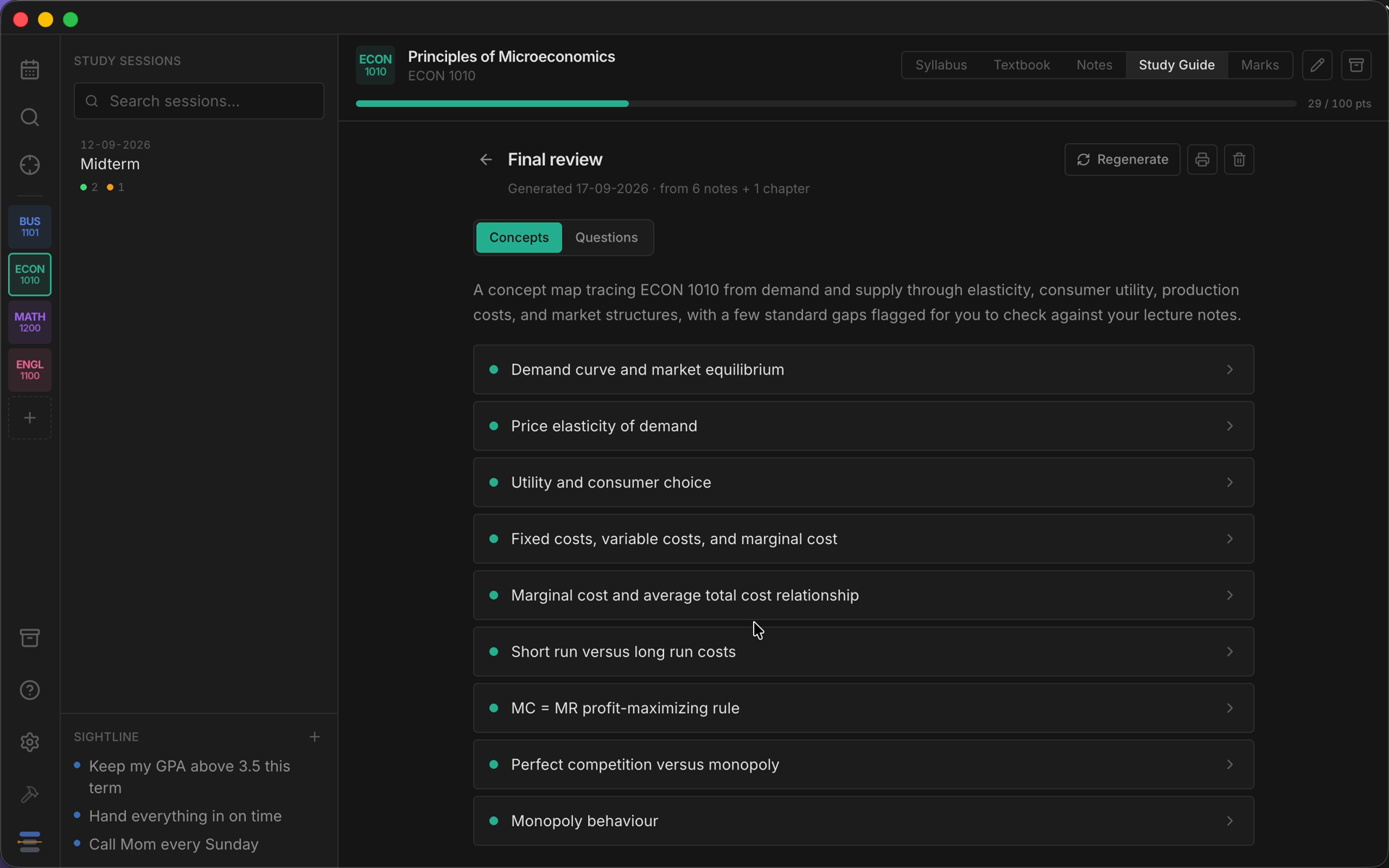
Once you have your concepts, press Generate questions. Answer in short paragraphs, and Bento gives feedback using Got it, Partial, or Revisit. You can generate more questions on the same topics as you practise.
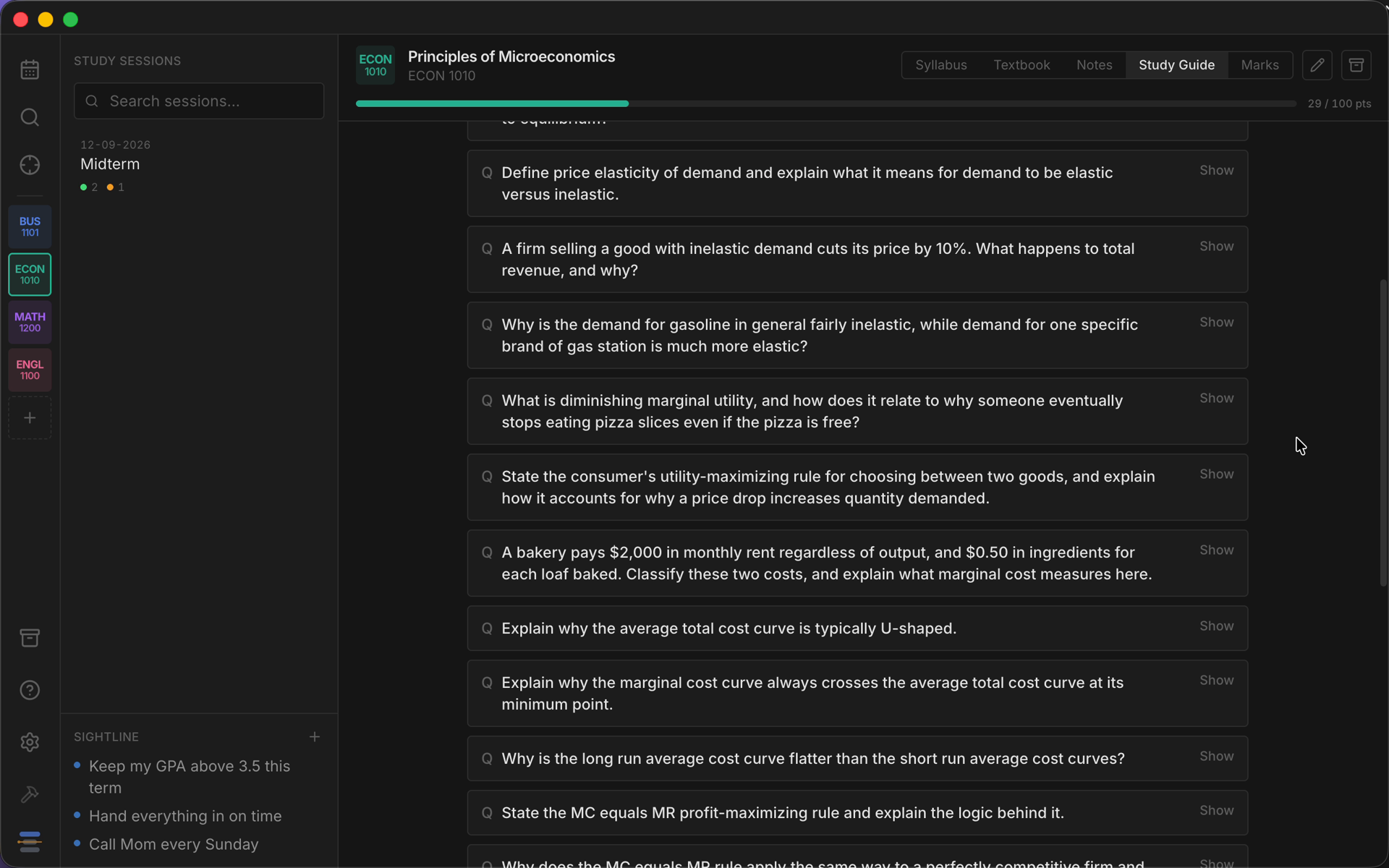
That gives you a way to move from reading your notes to attempting answers. It also shows you which explanations you need to return to.
Download Bento, add notes from one lecture, and generate your first set of questions.